
Literacy & Inquiry
At Maeroa Intermediate, learning in our classrooms is built on a knowledge-rich curriculum. This means students are exposed to a wide range of ideas, stories, and concepts that grow their understanding of the world and help them make meaningful connections across subjects.
Literacy sits at the heart of our learning. Reading and writing are not taught in isolation; instead, they are woven into real contexts. Students might explore history through diaries and letters, investigate science by reading articles and reports, or connect with the arts through poetry and stories. In every subject, students are encouraged to read widely, expand their vocabulary, and express their ideas in clear and effective ways.
At the same time, we make sure the foundations are strong. Key literacy skills—such as sentence structure, grammar, comprehension, and critical thinking—are taught explicitly. This balance means students develop the tools they need to succeed while also experiencing the excitement of learning through rich content.
In our classrooms, knowledge and skills work hand in hand. Students become confident readers, writers, and thinkers, prepared not only to excel in school but also to participate in conversations and opportunities beyond the classroom.
Maths
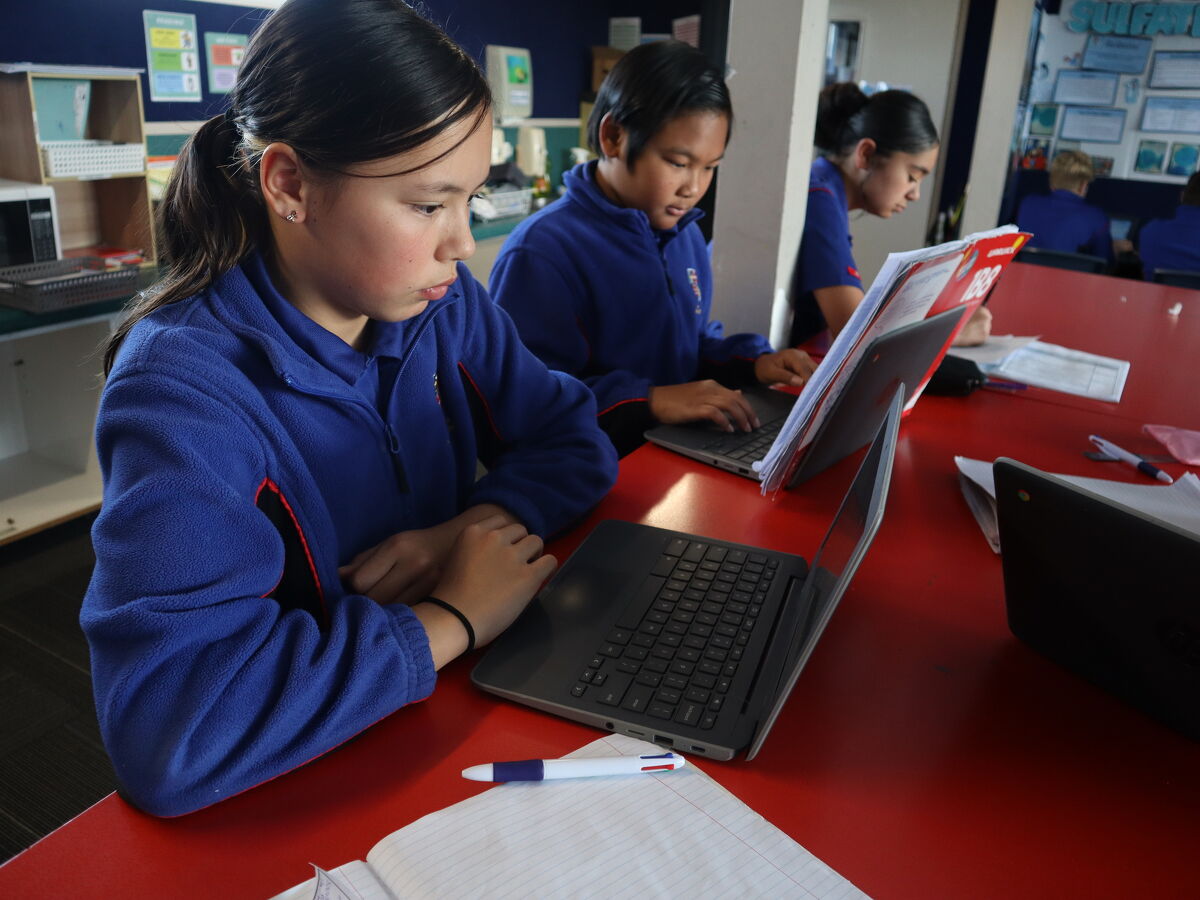
At Maeroa Intermediate, mathematics learning is designed to make sense of the world by moving from concrete to abstract thinking. Students begin with hands-on experiences using materials, diagrams, and real-life contexts to explore number, algebra, geometry, measurement, and statistics. These practical activities help them see how maths works in everyday life and give meaning to the symbols and processes they will use later.
A strong emphasis is placed on basic facts knowledge—knowing addition, subtraction, multiplication, and division facts quickly and accurately. These form the building blocks that allow students to tackle more complex problems with confidence.
We also believe in the power of explicit teaching. Teachers carefully model strategies, explain steps clearly, and guide students as they practise and apply their learning. By combining concrete experiences, strong foundations, and clear instruction, students grow into confident problem-solvers who can think flexibly and use maths in many different situations.